
“As a result of the bond between the work of imagination and historical reconstruction, Laura Esquivel narrates, with an intense and warm style, the life adventure of this woman, who believed Cortés would put an end to the terrible human sacrifices by the Aztec religion, but instead, ended up discovering the cruelty, no less bloody, of the conquistadores.”
 Para leer este post en español, presiona aquí.
First things first
We read Malinche at Book Club. We had three candidates, all Mexican authors; that day I voted for another book, but this one was the winner. That is why I love Book Club, because I end up reading books I never thought I’d read, and with many of them I end up very pleased. This is one of them.
Synopsis
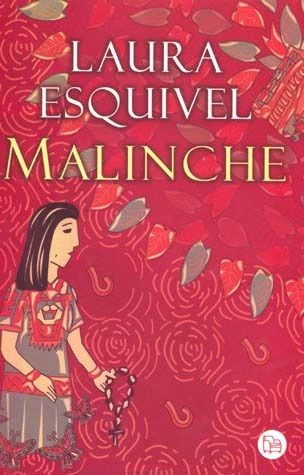
As a result of the bond between the work of imagination and historical reconstruction, Laura Esquivel narrates, with an intense and warm style, the life adventure of this woman, who believed Cortés would put an end to the terrible human sacrifices by the Aztec religion, but instead, ended up discovering the cruelty, no less bloody, of the conquistadores.
Malinche is perhaps the most encompassing look by Esquivel, about the most important topics of her work: the Mexican, and the feminine condition.
Malinalli, best known as La Malinche, was Hernán Cortés’ lover and interpreter between Spaniards and Aztecs during the Conquest. Centuries later, she has been accused of betraying her people by selling them to the invaders.
Personal Opinion
As it usually happens with a Book Club’s pick, I start reading it with no expectations because it is not a book I searched for, but it came to me, and the surprise I got with Malinche was so great, that I am recommending it everywhere.
I want to begin by saying that for me, Laura Esquivel’s narrative is beautiful. The book is written in such poetic way that is simply wonderful. I have not read a historic novel with such magic and beautiful touch.
The beginning of the book recounts the ritual of Malinalli’s birth and then her Baptism; both beautiful, and I think they were actually my favorite parts, as well as the relationship she had with her grandmother.
The book is not just about the arrival of the conquistadores, and Malinalli’s duty as an interpreter, but about her feelings, her beliefs, her gods, her love and respect towards the land, water, air; then her confusion after seeing that the Spaniards were not what she thought, they were not the reincarnation of her gods.
In this book, you will find details about the Spanish conquest, based on extensive research by the author, but under Malinalli’s point of view; what she may have thought based on her culture and beliefs; how she saw the Spaniards at first and how she started changing her opinion after witnessing their atrocities. To me, this is a beautiful historic novel.
Her life has been, and still is, interpreted in different ways; la Malinche is considered by some, as the symbolic mother of the new mestizo culture; by others, as a victim of cultural shock; and by many others, as a traitor. Reading this book, I think the three theories apply at some point, so pigeonholing her does not seem fair.
Laura Esquivel’s version is poetic, romantic and sacred. I loved that she wrote about spirituality pre-conquest, before catholic religion replaced everything.
If history is not your thing, I still recommend you this book, because you won’t feel it as such.
Xoxo,
MJ
Other book reviews on my Blog:
A recipe for love, by Nicola Yeager
The White Masai, by Corinne Hofmann
How to start a Book Club

I love to write about my favorite things: motherhood, storytelling, travel, books, series and pastry recipes! Most of all, I love connecting with people from around the world.
–
Me encanta escribir sobre mis temas favoritos: maternidad, narración, viajes, libros, series ¡y recetas de repostería! Sobre todo, me hace feliz conectarme con gente de todo el mundo.